
Does Your Company Have a Management Addiction?
Leadership vs. Management and Why Performance Metrics Aren’t Enough
A lot of companies don’t have a leadership problem in the way they think they do.
They have a management addiction.
They’ve adopted EOS. They’ve built dashboards, scorecards, KPIs, quarterly goals, meeting rhythms, project trackers, performance reviews, and accountability charts. They’ve operationalized almost everything. They’ve defined and implemented the right tech stack.
And to be clear, all that is worthwhile.
Metrics matter. Execution matters. Clarity matters. Productivity matters. A business without measurement is usually a business drifting toward confusion.
But somewhere along the way, many organizations started believing that if they could measure and track the right things better, they could lead well.
That’s where things get dangerous.
Management can tell you whether the numbers are moving. Leadership helps you understand why people are moving with them—or why they’re quietly disengaging while the dashboard still looks green.
Management tracks performance.
Leadership shapes the conditions that make performance sustainable and meaningful.
Many leaders and their teams are smart, capable, and operationally sophisticated. They embrace accountability. What they’re missing is the mortar that holds all of it together: trust, courage, clarity, relational health, and leaders who know how to confront reality without crushing people in the process.
That’s the difference between managing work and leading people.
What Is the Difference Between Leadership and Management?
Leadership and management are both necessary, but they are not the same thing.
Management creates structure. It organizes work, measures progress, clarifies responsibilities, tracks performance, and helps teams execute consistently.
Leadership shapes people, culture, trust, direction, and meaning. It helps people understand where they’re going, why it matters, how they need to work together, and what kind of responsibility the moment requires.
Management asks, “Did we hit the goal?”
Leadership asks, “How do we help our people navigate all the change and effort required to accomplish the goal? AND . . . What kind of people are we becoming while we pursue the goal?”
A healthy organization needs both, but when management replaces leadership, people become resources to optimize instead of human beings to develop, trust, challenge, and lead.
Performance Metrics Are Useful. They’re Just Not Enough.
Performance metrics are seductive because they give leaders the feeling of control. They are tangible. Easily measurable.
You can look at a number and feel like you know what’s happening.
Revenue is up. Retention is down. Productivity is flat. Margin is improving. Engagement is slipping. Sales calls are increasing. Utilization is on target.
Helpful information, but while a metric can reveal a symptom, it rarely tells the story.
A decline in employee retention may point to compensation and benefit issues. It may more likely also point to a manager people don’t trust or a team that doesn't like each other.
A missed sales target may reflect market conditions. It may also expose a team that’s afraid to tell the truth.
A productivity increase may look good on paper. It may also be fueled by burnout, fear, or heroic effort that is neither sustainable nor scalable.
Numbers can tell you what happened.
They can’t always tell you the story of who, how, and why it happened.
Don’t Confuse Measurement With Maturity
Measurement is not maturity. Accountability is not organizational health. Management activity is not leadership impact.
This distinction matters because some leaders assume that more measurement will automatically create better performance. Sometimes it does, but often more measurement only gives the organization a cleaner way to avoid the harder questions.
The team may have a dashboard, but does it have trust?
The meeting may have an agenda,
But can people name the real issue in the room?
The organization may have goals, but do leaders have the courage, clarity, and maturity to pursue those goals without damaging the people responsible for carrying them?
Just below the waterline is where leadership begins.
Why Leadership Matters for Organizational Health
Organizational health is the condition of the human system inside the business.
It includes trust, clarity, alignment, honest communication, wise decision-making, healthy conflict, emotional maturity, and the ability to tell the truth without unnecessary damage. That’s all less concrete than a KPI, but it’s not less practical.
A team with low trust moves slowly, even when everyone is busy.
A team with poor clarity wastes energy through confusion, duplication, and rework.
A team that avoids conflict becomes polite on the surface and resentful underneath.
A team that lacks mature leadership may still hit goals for a season, but it often does so through exhaustion, fear, personality, unnecessary turnover, or force of will.
Eventually, the bill comes due.
Culture has an economic cost.
Distrust costs money. Confusion costs money. Avoided conversations cost money. Unclear expectations cost money. High performers who poison the room cost money. Leaders who won’t do their own work cost money.
The cost may not show up immediately on the dashboard, but it will.
Management Reacts. Leadership Engages.
Management asks useful questions:
Are we on track?
Who owns this?
What’s the deadline?
What’s the measurable outcome?
What needs to be adjusted?
Those questions matter. Without them, organizations drift.
Leadership asks a different kind of question:
What’s really happening here?
What are people afraid to say?
Where has trust been weakened?
What does this moment require of us?
Who needs clarity?
Who needs challenge?
Who needs care?
What unhelpful patterns are we repeating?
How can we develop more buy-in?
Leadership is not opposed to performance. It simply refuses to reduce performance to mechanics. The best leaders engage the human reality underneath the operational reality. They know the spreadsheet matters. They also know the spreadsheet is not the whole story.
The Hidden Danger of a Green Dashboard
Some of the most fragile organizations look successful from a distance.
The numbers are fine. The meetings are happening. The goals are documented. The operating system is clean, but underneath the surface, the executive team avoids conflict. Mid-level leaders are overwhelmed. People are performing agreement in meetings and processing frustration in hallways. Feedback is softened until it becomes useless. The founder is still the emotional center of the company. Everyone is busy, but not everyone is honest.
The dashboard looks green. The culture is yellow (Maybe red).
That’s why leaders can’t rely on metrics alone. Metrics can help a leader see movement, but they can also hide decay if no one is paying attention to the organizational health of the system.
You can hit the quarter and lose the people who made it possible.
That’s not leadership.
That’s extraction with a better spreadsheet.
As Organizations Grow, Management Gaps Become Leadership Gaps
In a small organization, leadership gaps are often hidden by proximity.
Everyone knows everything. The founder can jump in. The team can improvise. Culture is carried by personality, memory, and hustle, but as organizations grow, complexity exposes what charisma used to cover.
Departments multiply. Mid-level leaders emerge. Communication gets filtered. Decisions slow down. Responsibility spreads. The founder can’t personally hold the whole culture together anymore. What used to be manageable through effort now has to become embedded through leadership.
This is where many teams make the wrong move. They add more management when what they really need is deeper leadership.
Another meeting.
Another report.
Another performance review cycle.
Another approval layer.
Another dashboard.
Often, the issue is not always a lack of information. Sometimes the issue is a lack of courage. No one wants to tell the founder they’re the bottleneck. No one wants to admit the executive team doesn’t trust each other. No one wants to say the culture rewards urgency over wisdom. No one wants to confront the high performer who’s poisoning the room. No one wants to name that the next generation of leaders has been given responsibility without formation.
These organizations keep measuring the smoke while avoiding the fire.
Leadership Tells the Truth With Care
Leadership tells the truth clearly, consistently, and with care.
This is one of the great differences between management and leadership. Management can identify whether something is off. Leadership has to name what’s off in a way people can actually face.
That requires maturity.
Maturity is the capacity to hold the tension of competing desires, ambiguity, and lack of options at the same time while staying present, honest, responsible, relational, and authentic.
Immaturity reacts. Maturity leads. Immaturity protects itself. Maturity tells the truth in service of the mission and the people. Immaturity uses metrics to blame. Maturity uses metrics to learn. Immaturity hides behind process. Maturity asks what the process is revealing.
The best leaders are not merely performance managers. They’re people developers and culture shapers.
They understand that the real work of leadership is not just getting people to produce. It’s helping people become the kind of team that can produce with integrity, resilience, creativity, and trust.
AI Makes Human Leadership More Important, Not Less
This matters even more in an AI-shaped workplace.
As technology accelerates, the human side of leadership becomes more valuable, not less.
AI can generate reports. It can summarize data. It can optimize workflows. It can help leaders see patterns faster than ever before.
But AI can’t build trust for you.
It can’t repair a fractured executive relationship.
It can’t discern the emotional weight of a succession conversation.
It can’t look a team in the eye and say, “We’ve been avoiding the real issue, and it’s time to face it together.”
That’s leadership.
The organizations that thrive in the next decade won’t be the ones with the most metrics. They’ll be the ones with the healthiest leaders interpreting those metrics wisely.
They’ll still care about performance.
But they’ll stop pretending performance is only mechanical.
They’ll understand that execution sticks when people are aligned, honest, equipped, and led by leaders who’ve done their own inner work.
Measure What Matters. But Don’t Stop There.
Measure what matters.
Track performance. Clarify goals. Review the numbers. Build the systems. Use the scorecard. Strengthen execution, but don’t confuse measurement with maturity. Don’t confuse accountability with health. Don’t confuse management activity with leadership impact. Don’t assume that because the numbers look good, the organization is well.
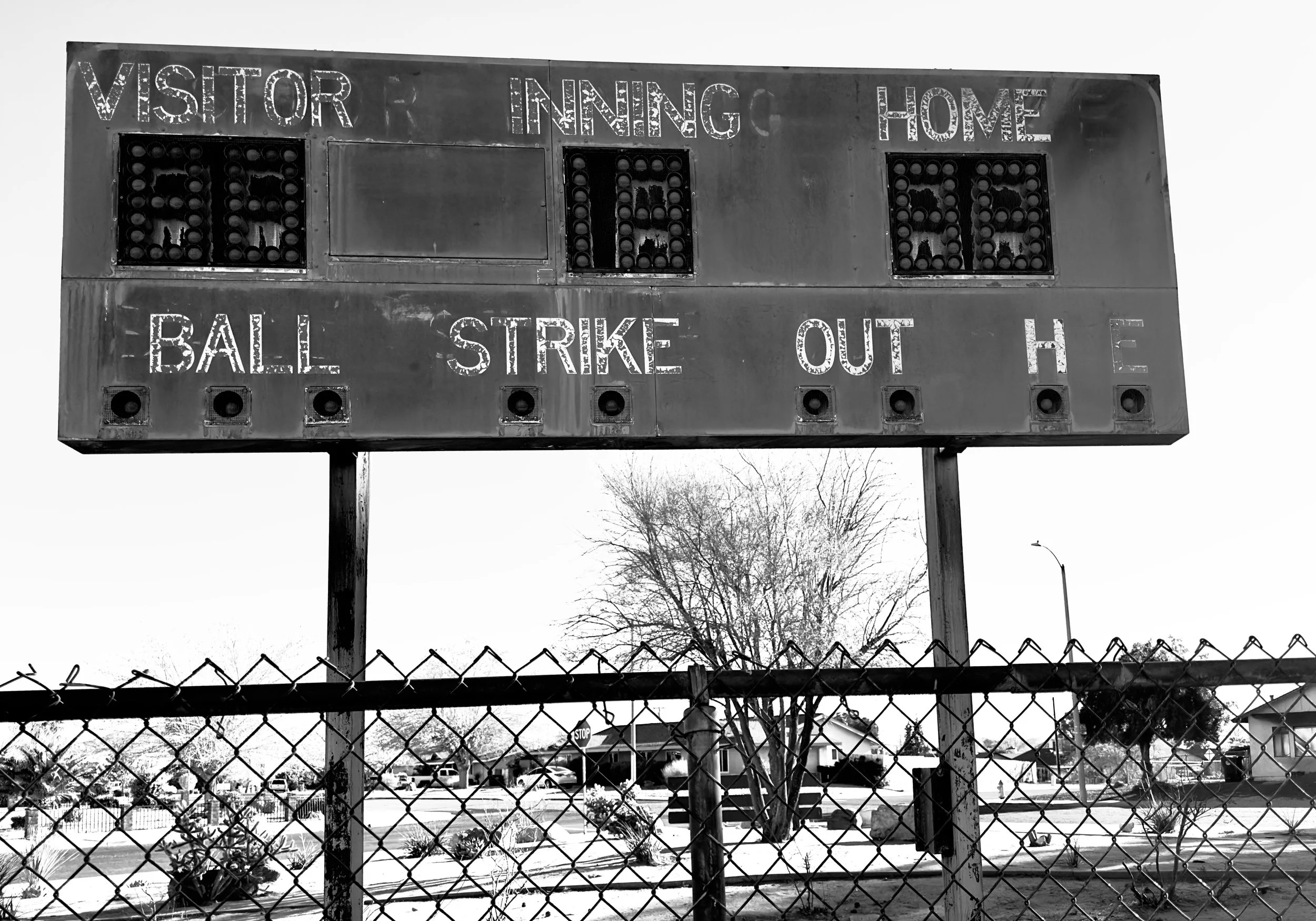
Performance metrics are a scoreboard. They are not the soul of the team. Management can keep the machine running. Leadership makes sure the humans running it are whole enough, brave enough, engaged enough, and aligned enough to build something significant.
Invitation
If you’re looking for a place to practice this kind of leadership—not just in theory, but in the real pressure of responsibility, relationships, performance, leadership development, and organizational life—Council Leadership exists for that purpose.
We’re a practicing community for leaders who want to grow in wisdom, clarity, courage, and wholeness.
A place to slow down, tell the truth, be challenged with care, and become the kind of leader who can carry responsibility without losing themselves or using people in the process.
If that’s the kind of leadership you’re longing to practice, we’d be glad to help you explore membership in Council Leadership.
Key Insights
What is the difference between leadership and management?
Management creates structure, tracks performance, and helps work get done. Leadership shapes trust, clarity, culture, courage, and the human conditions that make performance sustainable.
Why are performance metrics not enough?
Performance metrics can show what happened, but they don’t always reveal why it happened or what it cost. Metrics need mature leaders who can interpret the human reality underneath the numbers.
Why does leadership matter for organizational health?
Leadership affects trust, communication, decision-making, accountability, conflict, and culture. When leaders neglect these human dynamics, performance eventually suffers.
Can a company have strong metrics and still be unhealthy?
Yes. A company can hit goals while avoiding conflict, burning out its people, weakening trust, or depending on unsustainable effort. A green dashboard doesn’t always mean a healthy organization.
How does AI change leadership?
AI can improve reporting, analysis, and workflow efficiency, but it can’t replace trust, moral judgment, emotional intelligence, or the courage to lead people through hard conversations.
-
Management creates structure, tracks performance, and helps work get done. Leadership shapes trust, clarity, culture, courage, and the human conditions that make performance sustainable.
-
Performance metrics can show what happened, but they don’t always reveal why it happened or what it cost. Metrics need mature leaders who can interpret the human reality underneath the numbers.
-
Leadership affects trust, communication, decision-making, accountability, conflict, and culture. When leaders neglect these human dynamics, performance eventually suffers.
-
Yes. A company can hit goals while avoiding conflict, burning out its people, weakening trust, or depending on unsustainable effort. A green dashboard doesn’t always mean a healthy organization.
-
AI can improve reporting, analysis, and workflow efficiency, but it can’t replace trust, moral judgment, emotional intelligence, or the courage to lead people through hard conversations.