
What Wendell Berry Teaches Leaders About Good Work
Leadership has no shortage of advice about how to accomplish more.
Build better teams. Make faster decisions. Increase accountability. Clarify the strategy. Improve execution. Grow the organization.
Those are often important efforts, but beneath them are older and more consequential questions:
What is good work? What is a good life? What do we owe one another? What is worth preserving? And what are we becoming through the ways we live, lead, and work?
Wendell Berry spent much of his life wrestling with those questions.
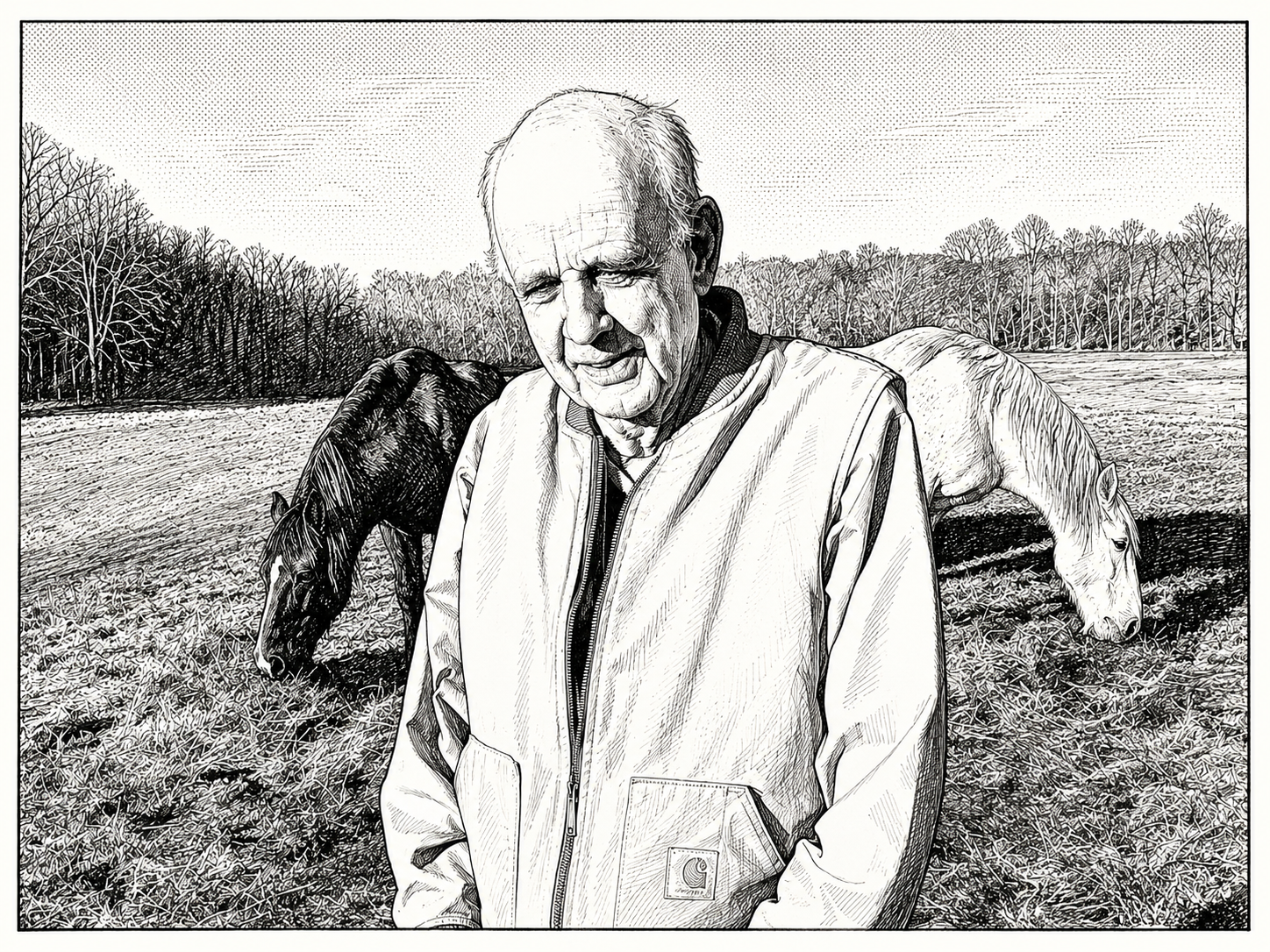
On August 31, 2026, Berry died at his home in Port Royal, Kentucky. He was 92. A poet, novelist, essayist, farmer, teacher, and cultural critic, Berry wrote more than 50 books while building a body of work centered on community, responsibility, land, work, limits, belonging, and the meaning of a human life.
He was not a leadership theorist.
And yet, few writers have influenced the philosophy behind Council Leadership more than Wendell Berry.
Not because he gave us a model for running meetings or building teams, but because he kept asking the questions that leadership ultimately has to answer.
What Does Wendell Berry Have to Do With Leadership?
Wendell Berry's leadership relevance begins with his insistence that how we live and work cannot be separated from who we are becoming or what our choices do to other people.
Leadership is not merely the ability to produce an outcome. It is the responsibility of exercising influence over people, resources, relationships, institutions, and communities that have been placed in our care.
Berry's writing helps widen the frame. Instead of asking only, “ Did it work?”, he invites us to ask, “Was it good?”
Was the work done with care? Did it strengthen or diminish the people involved? Did it honor appropriate limits? Did it contribute to a healthy community? Did it leave something worth inheriting?
Those aren't secondary leadership questions. They may be the most important ones.
Good Work Is More Than Successful Work
One of our Core Values at Council Leadership is:
Do Good Work — Be the Standard.
Berry has helped shape the language and imagination behind that value. In many ways, Wendell Berry and good work are inseparable themes.
Modern organizations are understandably preoccupied with outcomes. Did we hit the number? Finish the project? Grow revenue? Improve margins? Win the client? Execute the strategy?
Results matter. Leaders are responsible for producing them, but results alone cannot tell us whether the work was good.
An organization can grow while exhausting its people. A leader can become extraordinarily successful while slowly losing the relationships that matter most. A team can produce an excellent outcome through a process that leaves behind confusion, resentment, or distrust.
The work succeeded.
But was it good?
Good work considers both what we accomplish and how we accomplish it.
It requires craftsmanship, clarity, integrity, responsibility, and care. It asks leaders to consider the consequences of their decisions beyond the immediate metric in front of them.
That makes good work and leadership a more demanding standard than successful work.
And, we believe, a better one.
Why Do People and Relationships Matter So Much in Leadership?
Berry resisted the tendency to turn human life into abstraction.
His fiction returns again and again to particular people in a particular place, living within webs of relationship, history, obligation, affection, conflict, and shared responsibility. His broader work likewise challenged cultural and economic systems that sever people from land, community, and one another. Rootedness became a defining theme of both his life and his writing.
Leadership can become abstract too.
We talk about human capital, head count, labor, talent pipelines, organizational charts, consumers, employees, productivity, and markets.
Those concepts have their place, but underneath every one of them are human beings. People with families and stories. People carrying ambition and insecurity, hope and grief, talent and limitation. People trying to do meaningful work while also figuring out how to be spouses, parents, friends, neighbors, and whole human beings.
Another of our values at Council Leadership is:
Love People — Relationships Are the Heart of Everything We Do.
That isn't sentimental language. It's a leadership philosophy.
Leadership is a profoundly human endeavor because leaders exercise influence in the lives of other people. Our decisions shape their experience of work. Our maturity affects the emotional climate around us. Our clarity or confusion travels through teams. Our character eventually becomes visible in the cultures we create.
People are not simply resources from which value is extracted.
They are people entrusted to our influence.
How we lead them matters. The relationship between community and leadership is central to Berry’s work.
Growth Is Not the Same as Flourishing
Berry was deeply suspicious of our unquestioned allegiance to more.
More production. More consumption. More speed. More scale. More technology. More efficiency.
He was not simply making an argument against growth. He was asking whether we possess enough wisdom to distinguish between what should grow, what should remain small, and what might be destroyed in the pursuit of more.
That is an increasingly important leadership question.
Council Leadership works with ambitious people. We believe in entrepreneurship, building organizations, taking risks, creating value, competing, growing, and doing consequential work.
Ambition can be a tremendous force for good, but growth and flourishing are not the same thing.
Growth asks, “How much more can we create?”
Wisdom also asks, “Toward what end?”
At some point in a leader's life, Can we do this? is no longer a sufficient question.
We also have to ask:
Should we?
What will it require?
What will it cost?
Who will bear that cost?
What are we unwilling to sacrifice?
And when might enough actually be enough?
We often say at Council Leadership that success shouldn't cost you what matters most.
Berry's work provides depth to that conviction.
Mature leadership requires learning the difference between expansion and flourishing, achievement and meaning, possibility and responsibility. This connection between leadership and human flourishing requires us to ask not only what can grow, but what is worth growing.
Knowing the difference requires wisdom.
Community Is Not the Same as a Network
Berry also understood something central to the Council Leadership philosophy: human beings become who they are in relationship.
We need community. Not merely networking. There is an important difference.
A network contains people you know. A community contains people who know you.
Community includes people who stay long enough to understand your story. People who can encourage you without flattering you, challenge you without abandoning you, and tell you the truth when your own perspective has become too narrow.
That matters increasingly as responsibility grows.
Leadership can become isolating. The more authority someone carries, the fewer relationships they may have in which there is no need to perform, protect an image, or already know the answer.
Information cannot solve that problem.
In fact, information has never been more abundant. Leaders have access to almost unlimited books, podcasts, courses, conferences, frameworks, research, and now artificial intelligence.
What remains scarce is wisdom in leadership. And wisdom is rarely formed by information alone. It develops through experience, reflection, failure, honest conversation, accountability, practice, and time. It often develops in the presence of other people.
You can acquire knowledge alone. It is much harder to become wise alone.
What Does Stewardship Mean in Leadership?
Perhaps the strongest connection between Berry's thought and our philosophy of leadership is stewardship.
Stewardship is the practice of treating something not merely as yours to use, but as something entrusted to your care.
Berry's understanding of agriculture was built around this idea. Land shouldn't simply be exploited for what can be extracted from it. Farming carries responsibility for the health of the land, the people working it, the surrounding community, and those who will inherit it. That concern for good farming, healthy communities, and the relationships between them continues through the work of The Berry Center today.
Leadership stewardship carries a similar responsibility. A company is something you steward. A culture is something you steward. Authority is something you steward. Capital is something you steward. A reputation is something you steward. People's trust is something you steward. Relationships are something you steward. And your own life is something you steward.
This changes the fundamental posture of leadership.
Instead of asking only:
How much value can I get out of this?
The leader begins asking:
What has been entrusted to me, and how do I tend it well?
That may be one of the most important questions a leader can learn to ask.
Bad Leadership Has a Human—and Organizational—Cost
None of this means organizational performance is unimportant. Quite the opposite. When leaders forget these deeper questions, organizations eventually pay for it. Work that ignores people produces burnout and turnover.
Growth without wisdom creates complexity the organization may not be mature enough to carry. Poor stewardship erodes trust. Leadership without self-awareness creates fear, confusion, defensiveness, and unnecessary conflict. A culture obsessed with output can slowly destroy the conditions required for sustainable output. The human cost and the economic cost aren't completely separate.
Healthy organizations need strong strategy, disciplined execution, accountability, and financial performance. But they also need trust, clarity, healthy relationships, mature leaders, meaningful work, and people who believe what they are building is worth their lives.
That is why leadership cannot be reduced to management technique. It's ultimately a human responsibility.
What Kind of Work Is Worth a Human Life?
Wendell Berry was not the philosophical foundation of Council Leadership, but he has been an important companion in the formation of our thinking. His work continually brings us back to questions beneath the surface of modern organizational life:
What is good?
What is enough?
What is worth our care?
What do we owe one another?
What should we preserve?
What does our work do to the people who perform it?
What are we cultivating?
And who are we becoming?
Berry received the National Humanities Medal in 2010 and was selected to deliver the National Endowment for the Humanities' Jefferson Lecture in 2012, recognition of a body of work that crossed poetry, fiction, cultural criticism, agriculture, ecology, and philosophy.
His death gives us reason to pause and honor that remarkable life.
But perhaps the best way to honor Wendell Berry isn't simply to remember what he wrote.
It is to keep asking the questions he spent his life asking.
For leaders, that means refusing to allow leadership to become merely another word for achievement.
It means doing good work.
Loving people.
Respecting limits.
Building communities where people can belong.
Stewarding what has been entrusted to us.
And measuring a life not only by what we managed to accomplish, but by whether the people, places, relationships, and organizations placed in our care were better because we were here.
Invitation
If you're looking for a place to practice this kind of leadership—not just in theory, but in the real pressure of responsibility, relationships, work, and organizational life—Council Leadership exists for that purpose.
We're a practicing community for leaders who want to grow not only in capability, but in wisdom, clarity, courage, maturity, and wholeness.
A place to slow down enough to ask better questions. To be known by other leaders. To receive wise counsel. To tell the truth about what leadership is requiring of you and consider who you're becoming in the process.
Because the goal isn't simply to become more successful.
It's to become the kind of leader capable of doing good work, loving people well, and wisely stewarding whatever has been placed in your care.
If that's the kind of leadership you're longing to practice, we'd be glad to help you explore Council Leadership.