
Leadership Is Not a Recipe. It’s a Practice.
There are at least three essential practices of leadership.
First, the practice of leading yourself.
Second, the practice of leading another person — the work of mentoring, coaching, listening, challenging, encouraging, and helping someone become more fully themselves.
Third, the practice of leading teams — the work of building trust, creating clarity, generating alignment, navigating conflict, and helping a group of people move together toward something that matters.
All three are necessary.
But the first practice shapes the other two.
How you lead yourself is how you lead everything and everyone.
What does it mean that leadership is a practice?
Leadership is a practice because it requires ongoing attention, repetition, reflection, correction, and growth.
Unlike a recipe, leadership can’t be reduced to fixed steps that always produce the same result. Leaders are working with people, pressure, emotion, trust, conflict, timing, and complexity.
That means leadership must be practiced, not merely understood.
This is one of the most important and least understood realities of leadership. Leadership is not merely a set of techniques we apply to other people. It is not simply a communication model, a meeting structure, a decision-making process, or a strategic planning rhythm.
Those things matter.
Tools matter. Frameworks matter. Structure matters.
But leadership is never less than the person doing the leading.
A leader can have the right framework and still create confusion. A leader can use the right language and still avoid the hard conversation. A leader can know the values, repeat the mission, and run the meeting while still leading from anxiety, ego, resentment, fear, or control.
This is why self-leadership matters.
Not because leadership should become self-obsessed, overly therapeutic, or endlessly introspective. But because the inner life of the leader eventually becomes visible in the life of the team.
Leadership is more like yoga or golf than baking or rocket science
Leadership is more like yoga or golf than baking or woodworking.
Experience and skill matter in all of them, of course. But with baking, if you follow a good recipe with reasonable care, the bread usually turns out. With woodworking, if you have the right measurements, tools, plans, and materials, you can often produce a reliable result.
Leadership is different.
Leadership is alive.
It’s dynamic, relational, emotional, situational, and layered. The same conversation that works with one person may fail with another. The same decision that creates clarity in one season may create anxiety in another. The same tone that feels direct to one team member may feel dismissive to another. The same strategy that was wise six months ago may now be inadequate because the people, pressure, timing, and context have changed.
Leadership is not a recipe.
It is a practice.
Which means the leader must be in practice.
The practice of self-leadership
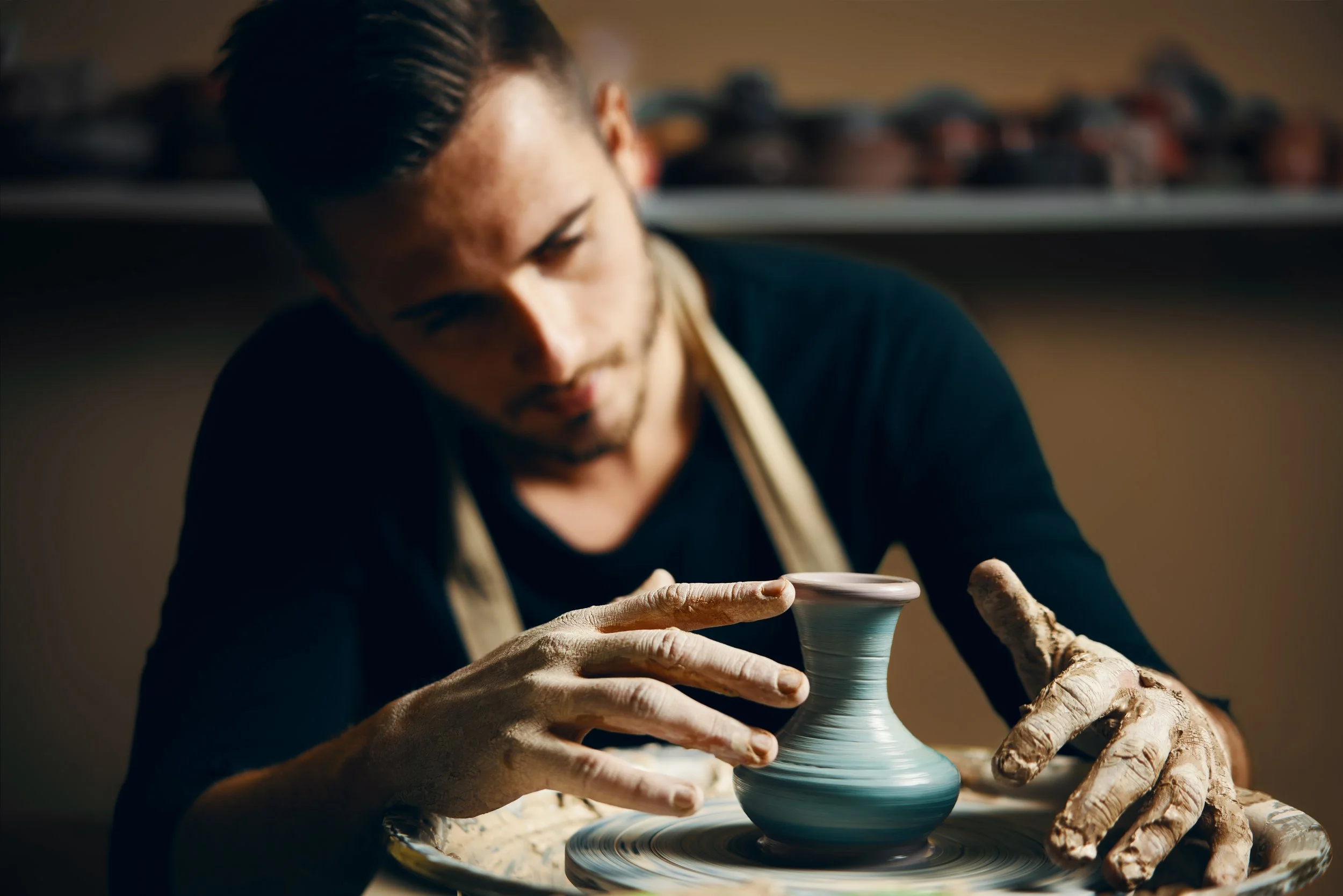
The Japanese word shokunin is helpful here. It’s often translated as “craftsperson” or “artisan,” but the idea carries something deeper than technical competence.
It suggests devotion to the craft.
A life organized around ongoing refinement.
A willingness to submit oneself to practice, repetition, humility, correction, and mastery that is never fully finished.
That is a better image for leadership than the heroic executive who simply knows what to do.
The best leaders are not merely talented.
They are devoted to the craft.
They practice how they listen.
They practice how they respond under pressure.
They practice how they tell the truth without unnecessary harm.
They practice how they hold tension without rushing to control.
They practice how they repair.
They practice how they notice what’s happening inside themselves before it leaks out onto everyone else.
Because it will leak.
How a leader’s inner life shapes the team
A leader’s inner life never stays private for long.
Their anxiety becomes urgency. Their insecurity becomes defensiveness. Their avoidance becomes confusion. Their resentment becomes distance. Their ambition becomes pressure. Their fear becomes control.
And the opposite is also true.
A leader’s steadiness becomes safety. Their clarity becomes direction. Their humility becomes trust. Their courage becomes permission. Their curiosity becomes learning. Their discipline becomes culture.
This is why self-leadership is not self-absorption. It’s service.
You don’t lead yourself first so you can become endlessly fascinated with your own inner world. You lead yourself first so that your inner world does not unconsciously rule the people, teams, and organizations entrusted to your care.
Becoming responsible for your own presence
Self-leadership is the practice of becoming responsible for your own presence.
It’s learning to notice your reactions before they become decisions.
It’s learning to tell the truth to yourself before you demand truth from others.
It’s learning to face your fear before you baptize it as wisdom.
It’s learning to govern your ego before it builds a culture around your need to be admired.
It’s learning to hold your power with humility, your influence with care, and your responsibility without losing your soul.
This isn’t a one-time insight. It’s not a personality assessment. It’s not a leadership retreat high.
It’s practice. And like every serious practice, it requires repetition. You do it badly. You notice. You return. You repair. You try again. You find a coach. You listen to feedback. You pay attention to your body. You examine your motives. You confess what is true. You become less impressive and more honest.
Over time, something changes.
Not all at once.
But slowly, the leader becomes more trustworthy because they are less governed by what they refuse to face.
The way you lead yourself becomes the way you lead others
The way a leader listens to themselves affects how they listen to others.
The way a leader handles their own disappointment affects how they handle conflict.
The way a leader names their own fear affects how much truth the team is allowed to tell.
The way a leader relates to their own limits affects whether the organization becomes humane or extractive.
The way a leader carries power affects whether people around them become more free or more afraid.
This is why how you lead yourself is how you lead everything.
Not because leadership is only internal work.
It is not.
Leadership requires strategy, execution, communication, mentoring, coaching, team building, decision-making, and courage in the real world.
But all of those practices pass through the person of the leader.
If you want to lead another person well, you must be practicing the art of becoming trustworthy with yourself.
If you want to lead a team well, you must be practicing the art of becoming clear, grounded, and responsible within yourself.
If you want to be the wisest and most effective leader you can become, you must give yourself to the craft.
Lose yourself in the practice.
Find yourself in the struggle.
If you are looking for a place to practice your leadership with greater honesty, wisdom, and support, we’re here to help.
Council Leadership is a practicing community for leaders who want to grow in wisdom, courage, clarity, and wholeness — not just as executives, but as people.
Key Insights
-
Leadership is a practice because it requires repeated attention, humility, correction, and growth. Leaders are working with people and complexity, not fixed inputs that always produce predictable outcomes.
-
Leadership is not a recipe because people, teams, conflict, pressure, timing, and trust are always changing. A formula may help, but leaders must still practice wisdom, presence, and discernment in real time.
-
Self-leadership affects team leadership because a leader’s inner life shapes the room. Their anxiety, clarity, humility, courage, and avoidance all influence trust, communication, and culture.