
What The Odyssey Teaches Us About Leadership and Coming Home
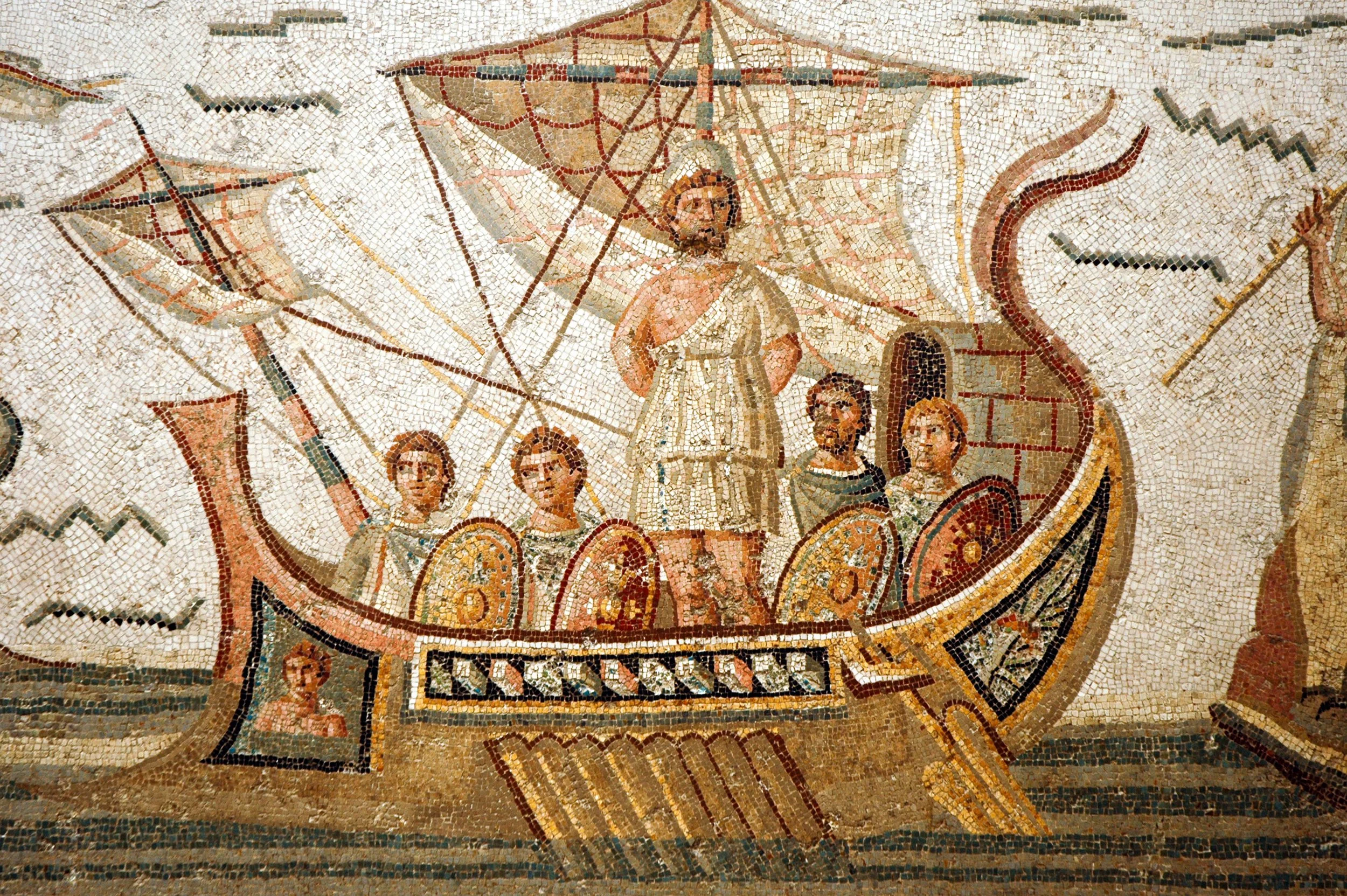
Every leader knows something about going to war.
Not literal war, perhaps, but the long campaigns of organizational life: building something from nothing, surviving a crisis, winning an opportunity, and making decisions that affect other people’s careers, families, and futures.
These experiences form us. They teach us courage, strategy, endurance, and resolve. They may even bring us the success we once believed would make everything feel complete.
But The Odyssey begins after the war has been won.
Troy has fallen. Odysseus has proven himself to be a courageous warrior and brilliant strategist.
And still, he can’t get home.
Many accomplished leaders know how to fight, build, achieve, and prevail. Far fewer know how to return—to themselves, to the people they love, to the values they intended to serve, and to the life their success was supposed to make possible.
The qualities required to conquer the world aren’t always the qualities required to live wisely within it.
Decisiveness can become control.
Endurance can become emotional absence.
Self-reliance can become isolation.
Ambition can carry us toward achievement while quietly carrying us away from home. The tension between leadership and ambition is one of the central themes of the journey.
The greatest leadership journey isn’t simply learning how to win the war.
It’s learning how to come home without bringing the war with you.
What Does The Odyssey Teach Us About Leadership?
The Odyssey and leadership are connected through the story of Odysseus’s long journey home to Ithaca after the Trojan War.
But homecoming isn’t simply a matter of geography. Odysseus must navigate temptation, loss, pride, uncertainty, and the consequences of his own choices. He must survive the world around him while confronting what the journey reveals within him.
That’s why there are enduring leadership lessons from The Odyssey.
Leadership isn’t only the ability to reach a destination. It’s the capacity to remain grounded in who you are, what you value, and whom you love while navigating everything that tries to pull you away.
The journey tests more than competence.
It tests character.
Every Leader Has an Ithaca
Ithaca is Odysseus’s kingdom, family, responsibility, and home.
For leaders, Ithaca represents the life they’re ultimately trying to build and protect.
It may be a marriage that still feels intimate after years of demanding work. Children who experience their parent as present rather than preoccupied. Work aligned with deeply held values. An organization that can flourish without the leader controlling every decision. A life shaped by meaning rather than constant urgency.
Every leader is moving toward something.
The deeper question is whether the destination they’re pursuing is still their true Ithaca.
It’s possible to become so committed to winning the next battle that we forget why we entered the war.
We pursue growth but lose connection.
We build organizations but neglect relationships.
We gain influence but become increasingly isolated.
We create a life that looks successful from the outside while feeling strangely unfamiliar from within.
Leadership maturity requires periodically asking:
What am I actually trying to return to?
The Strengths That Win the War Can Keep Us From Home
Odysseus survives because he’s intelligent, courageous, determined, and clever. But the same strengths that help him survive also create suffering. These are among the most important of Odysseus’ leadership lessons.
His confidence becomes pride.
His courage becomes recklessness.
His desire for recognition overrides his judgment.
This is one of the most important truths in leadership development: our greatest strengths and our most persistent liabilities are often closely related.
Decisiveness helps an organization move quickly. Overextended, it becomes impatience.
Responsibility helps a leader carry difficult burdens. Overextended, it becomes an inability to trust anyone else.
Resilience helps someone withstand hardship. Overextended, it becomes emotional distance.
Confidence helps people follow. Overextended, it becomes certainty that leaves no room for learning.
The goal isn’t to weaken our strengths. It’s to govern them.
Self-leadership is the practice of recognizing what’s happening within us and taking responsibility for how it affects the way we lead.
Without that practice, strengths become compulsions. We stop choosing how to use them and begin being controlled by them.
The abilities that helped us win the war may keep us from finding our way home.
Every Leadership Journey Has Its Sirens
The Sirens lure sailors with a song so compelling they can’t resist it.
Leadership has its own Sirens.
More success.
More recognition.
One more expansion.
One more demanding season.
One more sacrifice before life finally slows down.
The Sirens rarely ask us to abandon what matters all at once. They persuade us to postpone it.
After this quarter.
After this launch.
After the company reaches the next milestone.
Then we’ll become present.
Then we’ll repair the relationship.
Then we’ll rest.
But the next demand always arrives.
Mature leaders don’t assume good intentions will be enough. They establish boundaries, invite people to tell them the truth, and protect time for relationships, reflection, health, and rest.
They build practices that help them remember what matters before ambition becomes overwhelming.
These practices aren’t limitations on leadership.
They’re how leaders remain free.
Some Monsters Travel With Us
Leaders face real external threats: financial pressure, failed strategies, difficult employees, board conflict, and economic uncertainty.
But eventually, every meaningful leadership journey turns inward.
The leader begins to realize that not every monster is outside the ship.
Some travel with us.
Pride. Fear. Resentment. Loneliness. The need for control. The need to be admired. The belief that strength means never needing help.
The external challenge often exposes the internal one.
Disagreement reveals our defensiveness.
Delegation exposes our distrust.
Failure uncovers the identity we built around achievement.
Conflict reveals how badly we need approval.
Uncertainty exposes our reliance on control.
The apparent problem may be strategic, but the deeper problem is often human.
The strategy may need to change.
But so might the strategist.
Self-Awareness Isn’t the Same as Self-Leadership
Many leaders have become skilled at explaining themselves.
They know their strengths, tendencies, triggers, personality types, and relational patterns.
That knowledge can be valuable. But the ability to describe a pattern isn’t the same as the ability to govern it.
Self-awareness recognizes what’s happening.
Self-leadership takes responsibility for the response.
Self-awareness says, “I become controlling when I feel uncertain.”
Self-leadership says, “I noticed my anxiety, clarified what mattered, and gave someone else room to lead.”
Self-awareness says, “Conflict activates my fear of rejection.”
Self-leadership says, “I told the truth with care even though I couldn’t control how it would be received.”
Knowledge can describe the journey.
Wisdom teaches us how to travel it.
The Long Middle Is Where Practice Becomes Transformation
Leaders may understand what needs to change long before they’re capable of consistently living it.
They know they need to delegate, but anxiety rises when someone chooses a different approach.
They understand that conflict is necessary, yet continue postponing the conversation.
They want to become more present, but reach for their phones whenever silence becomes uncomfortable.
Insight happens in a moment.
Leadership transformation happens through practice.
Human beings rarely change neatly. We make progress and retreat. We repeat patterns we can clearly explain. We show courage in one relationship and return to self-protection in another.
The goal of leadership development isn’t perfection.
It’s increasing maturity and responsibility.
Can the leader notice the pattern sooner?
Can they tell the truth without becoming defensive?
Can they repair the harm?
Can they make a wiser choice the next time?
Transformation isn’t the absence of struggle.
It’s learning to engage the struggle differently.
Unexamined Leadership Has an Organizational Cost
A leader’s inner life never remains entirely private.
Fear becomes control.
Insecurity becomes defensiveness.
Avoidance becomes a culture of silence.
Anxiety becomes urgency for everyone else.
When leaders don’t govern themselves, teams learn to organize around them. People manage the leader’s mood, wait for permission, withhold disagreement, and escalate decisions they should be trusted to make.
The cost shows up in trust, clarity, decision-making, accountability, and organizational health.
Talented people disengage.
Difficult truths stay hidden.
Responsibility becomes confused.
The organization becomes increasingly dependent on one person’s judgment and emotional state.
The opposite is also true.
When leaders become more grounded, people speak more honestly.
When leaders loosen control, others develop judgment.
When leaders become less defensive, conflict becomes more useful.
The inner work of leadership isn’t separate from organizational performance.
It shapes what becomes possible for everyone else.
Can You Come Home Without Bringing the War With You?
The war required Odysseus to be vigilant, strategic, suspicious, and forceful.
Home required something different.
Presence.
Trust.
Patience.
Humility.
The ability to be known.
Many leaders struggle with this transition. The qualities that help someone succeed in a demanding environment don’t automatically disappear when the workday ends.
Urgency becomes impatience.
High standards become criticism.
Strategic thinking becomes emotional distance.
The need to solve problems makes it difficult to simply listen.
The leader has returned physically, but the war came with them.
Wholeness is the capacity to move between the demands of life without being dominated by one of them.
It doesn’t require becoming less ambitious or effective. It means becoming capable of setting down what’s no longer needed.
The mature leader doesn’t deny what the war required.
They simply refuse to let it define the whole of who they are.
The Greatest Journey Is the Return
The deeper purpose of transformation isn’t escape from ordinary life.
It’s a wiser way of inhabiting it.
Leadership will always require difficult campaigns. There’ll be organizations to build, crises to navigate, decisions to make, and responsibilities to carry.
The goal isn’t to avoid the journey.
It’s to remember where we’re trying to go.
To recognize the Sirens before their song becomes irresistible.
To confront the monsters within us as honestly as we face the obstacles around us.
To allow insight to become practice.
And eventually, to return to the people, values, and life that made the struggle meaningful in the first place.
The world doesn’t need fewer courageous leaders.
It needs leaders whose courage can survive the journey home.
An Invitation
If you’re looking for a place to practice this kind of leadership—not only in theory, but in the real pressure of responsibility, relationships, success, and organizational life—Council Leadership exists for that purpose.
We’re a practicing community for leaders who want to grow in wisdom, clarity, courage, maturity, and wholeness.
A place to slow down, tell the truth, examine the patterns shaping your leadership, and receive both challenge and care from people who understand the weight of responsibility.
A place to become the kind of leader who can carry responsibility without losing themselves.
No one else can make the journey for you.
But none of us has to make it alone.
If that’s the kind of leadership you’re longing to practice, we’d be glad to help you explore membership in Council Leadership.
Key Insights
-
The Odyssey teaches that leadership isn’t only about courage, achievement, or strategy. It’s also about remaining connected to your values, relationships, purpose, and sense of self throughout the journey.
-
Ithaca represents the life a leader ultimately wants to build and return to. It may include meaningful work, healthy relationships, integrity, presence, and an organization that can flourish without excessive control.
-
Strengths become liabilities when they’re overused or ungoverned. Decisiveness can become control, resilience can become emotional distance, and responsibility can become an inability to trust others.
-
Self-awareness is recognizing your emotions, motivations, and patterns. Self-leadership is taking responsibility for how you respond and practicing a more mature choice.
-
A leader’s inner patterns shape trust, communication, accountability, culture, and decision-making. Unexamined fear often creates control and silence, while greater maturity creates clarity and shared responsibility.